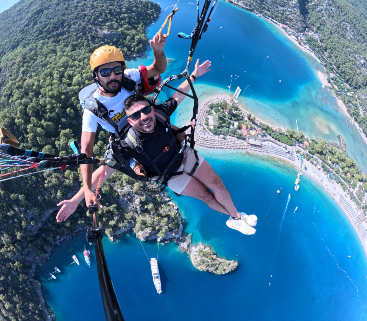
Hey, I'm Taha!
I spent years doing research at the intersection of AI and language. A PhD in NLP in the UK, some time at Amazon Alexa and IBM Watson,
but most recently a Research Fellowship at Imperial College London studying how AI affects the way university students learn and think.
That last one changed my direction. Watching students lean on AI to skip the hard parts of learning, the struggle, the confusion, the
moment things click, convinced me that we need to rethink how AI is designed to support learning instead of replace it.
As such I'm building a learning space with a Socratic AI tutor that restores the cognitive struggle needed for in-depth learning by asking
questions and giving hints, never answers. Students face real problems and work backwards to understanding the required skill, the same way
we learn swimming by being facing the water first. And the best way to make learning stick is to teach it, period. So students teach each
other what they figure out, as a byproduct, we restore the social learning that is being swept away by the rise of Gen AI in higher education.
I am now based around Montreal and always up for a conversation about how AI is shaping Education.
Experience
Imperial College LondonI spent two years at Imperial researching how Generative AI is reshaping the way university students learn, specifically in subjects that require Computational Thinking or CT, the ability to break down complex problems, reason through them methodically, and build solutions from first principles. The hard truth is that students are increasingly offloading the hard cognitive work to AI, and the hard cognitive work is exactly where learning happens. The research involved working directly with students and faculty across engineering and computing modules, running classroom studies, and constructing a framework for rethinking AI designs that supports CT rather than replace it. That work is now shaping what I'm building next.
Amazon Alexa, CambridgeI joined the Alexa ASR team working on converting customer speech into text accurately across different languages. My main contribution was expanding language support for the Arabic Saudi Arabian locale, which involved a lot of work on how spoken Arabic gets interpreted correctly by a machine. A challenging and intense linguisting problem, alongside a crash course in what it means to ship AI at Amazon's scale.
Adarga AI, LondonAdarga built platforms for collecting and analysing open-source intelligence from news and social media. I developed a data ingestion library for Twitter and then focused on extracting information from the network itself, detecting emerging communities, identifying key influencers, and surfacing events as they happened. My first taste of applied NLP in a fast-moving startup environment.
IBM Watson, BöblingenIBM Watson's strength was mining and analysing large datasets across multiple languages. I was responsible for Arabic NLP, which meant building a morphological processor from scratch to simplify highly inflected Arabic words down to their base forms. Arabic morphology is genuinely one of the harder problems in NLP and this is where I took a leap on low-resourced languages.
PhD Research
Sentiment Analysis for Low-Resourced Languages on Social Media
I did my PhD at The Open University's Knowledge Media Institute in the UK, studying a language that barely existed in the NLP literature:
Arabizi. It is dialectal Arabic written in Latin script, the way a generation of Arabs in Lebanon, Egypt, Morocco and elsewhere naturally text each other.
No standard spelling, no NLP tools, no datasets. A genuine linguistic mess!
The core challenge was that a single sentiment word in Arabizi could appear in hundreds of morphological and orthographic variants. To tackle this
I was hand-crafting NLP rules until I discovered word-embeddings. Not knowing whether it applies, I built datasets from scratch, designed a character-level
embeddings neural network, that expanded sentiment lexicon coverage by over 50%! The domain was new and under-explored, the experience was slow, humbling,
and very rewarding.
All resources from this project are published openly at project-rbz.
You can also read a blog post about this experience and Arabizi here.
My focus has since shifted from the intersection of AI and languages to AI and learning.
More About Me
I am a paranoid optimist. I believe things will work, but refuse to assume they will without deep struggle and hard work.
I have lived in Lebanon, Germany, the UK, and now Canada. That teaches to be comfortable being uncomfortable.
I hold a purple belt in Brazilian Jiu-Jitsu and have competed regionally. This sport has followed me everywhere I have lived and travelled,
which says something about it. I also play table tennis at a club level and occasionally chess, which I competed in back in Lebanon.
I am endlessly curious about how things work under the hood. With AI everywhere today, that curiosity has become almost compulsive. I need to
understand the architecture behind these models, the mathematics that makes them behave the way they do. That itch is probably what keeps me
somewhere between research and engineering.
Get in touch, say Hi!